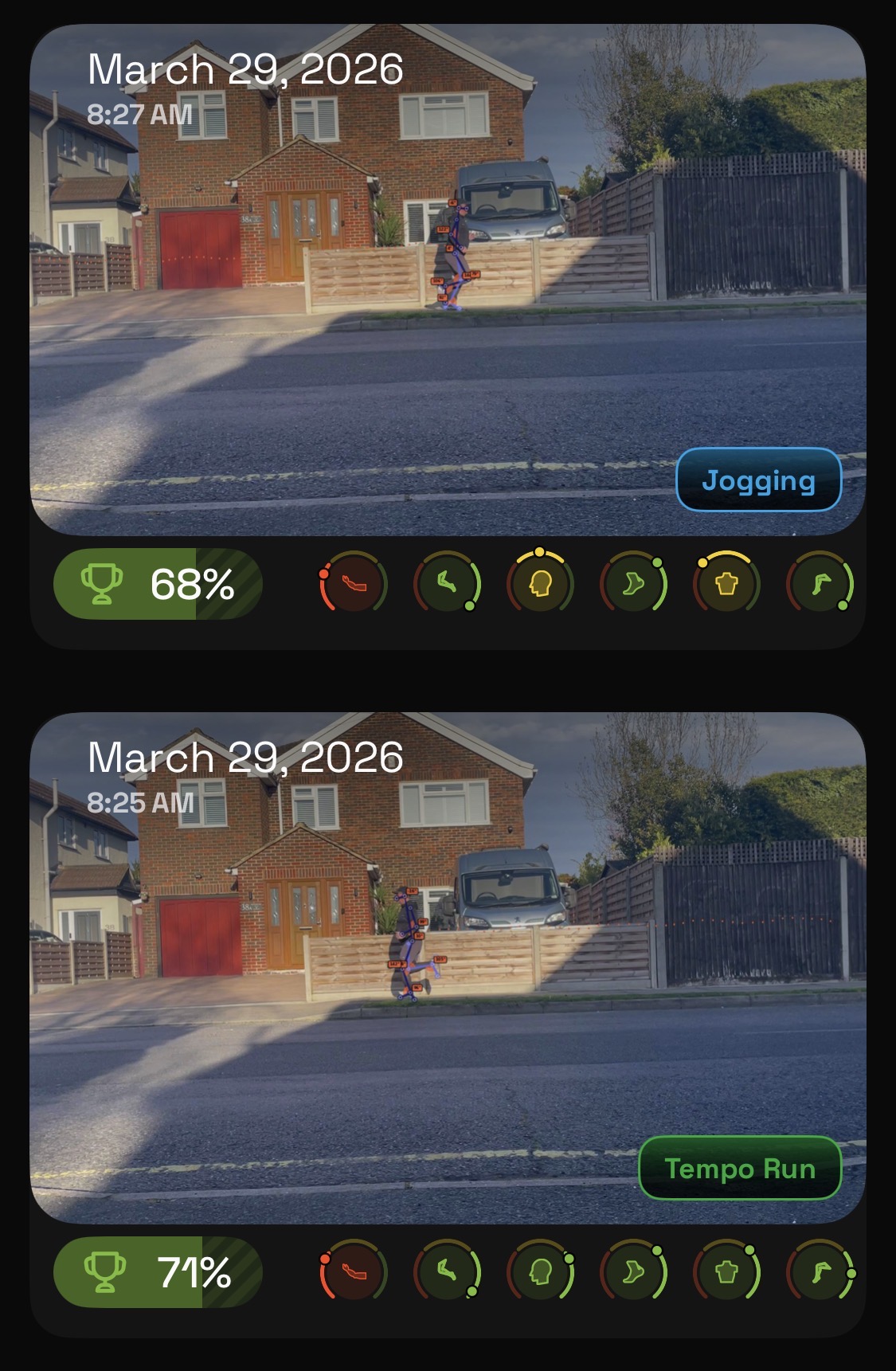
I’ve been given access to Ochy by our club running coach - anyone familiar or interested? Thought @explorerJC might be.
You upload a 10s clip and it analysis it in a few seconds “with AI”.
I’ve been given access to Ochy by our club running coach - anyone familiar or interested? Thought @explorerJC might be.
You upload a 10s clip and it analysis it in a few seconds “with AI”.
EA are offering discounts for it, but it looks like another subscription  guess that’s understandable for coaches.
There was something similar quite a few years ago for aero testing on your bike fit, before everything was marketed as AI!
Yea I’m not paying anything so that’s why I’m trying it.
It’s only got two clips from this morning, but identified a problem I’ve been told about before - the arms. And as I knew, my form is worse when jogging.
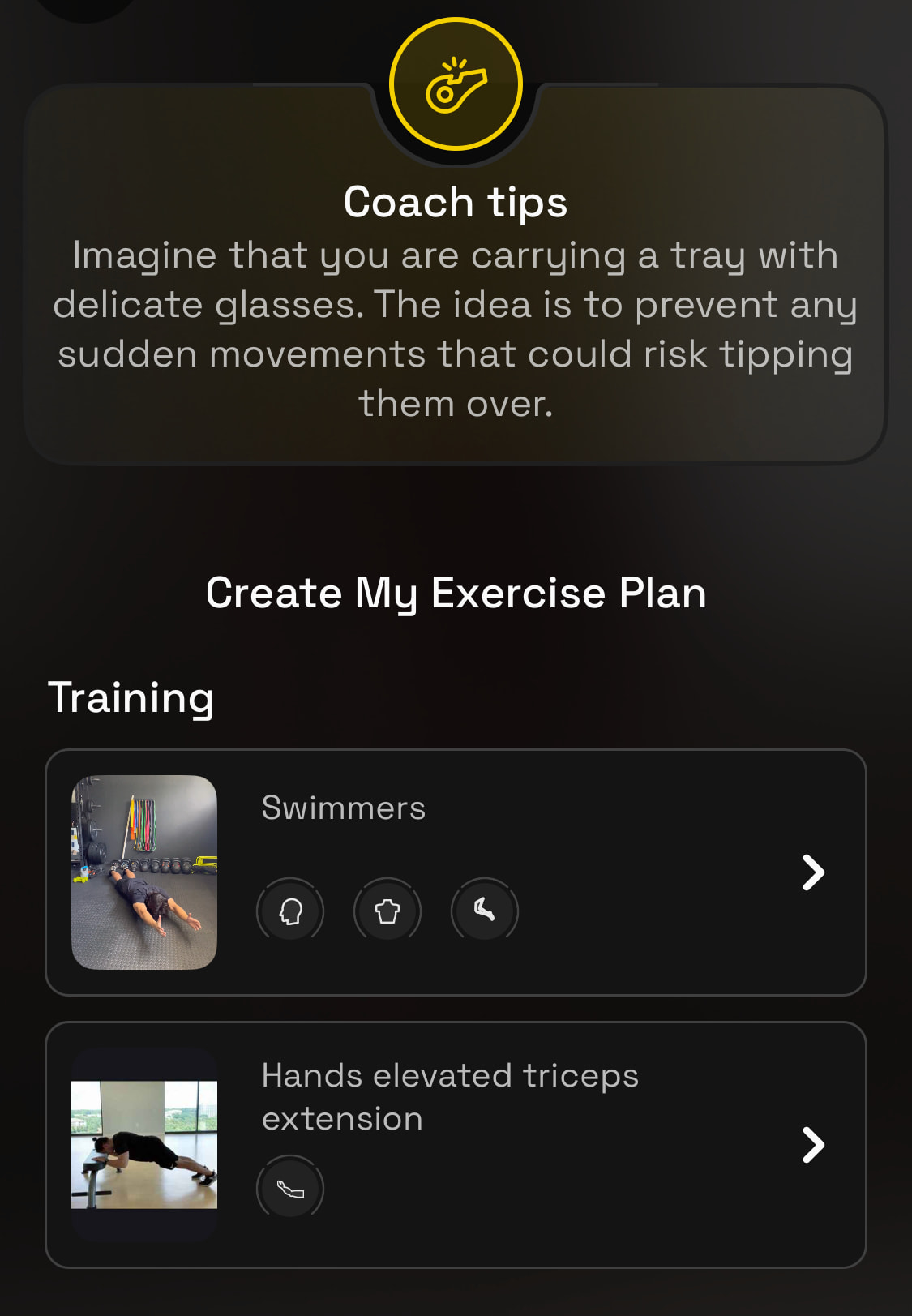
Interestingly they recommend exercises rather than correcting in your next run. I suppose there’s a long term logic to that.
How gutting would it be if you went balls out, uploaded the footage, and the computer thought for a minute and then flashed up “JOGGING”
What happens if you upload an elite marathoner with terrible form like Conner Marantz or Florence Kiplagat?
Yer so its not “AI” in the real sense.
Computer Vision AI
Our proprietary pose estimation algorithm is specifically designed for running, enabling us to accurately track joint positions, calculate joint angles and detect key gait events like footstrike and toe-off. This powers precise measurements of essential performance and injury-related metrics, including cadence, ground contact time, and flight time.
](https://www.ochy.io/#)
But this is clever, it is basically measuring angles of body parts at various positions, would be useful with some stryd interaction as well, but its not a trained AI model. Not saying it isn’t useful though
What do you think it would make of me?
Good question
Interested in what it observes and what it recommends
Arms are usually the least of people’s worries.
Most of the ‘necessary’ angles are visible in video already. And it therefore depends on what it’s recommending and why
Tell that to the Iranians, oh, wrong thread.
yer I’m not seeing it being a coaching tool, but equally is it really going to help the weekend runner with no coach, yet more data overload maybe, and its what they will do with the data that matters if its being interpreted correctly.
An AI model like this was something I was looking to research further, but 1) its getting the data to train a model on, knowing what outcome you are measuring as typically the target is a binary outcome, what to do with any data you get, and none of that is withstanding the ethics of using video footage of random elite athletes who may or may not have good technique (whatever that may be) in the first place.
what data do you want?
i would hope whatever system is doing the analysis will (should) know what to do with it…
don’t then…build a model of ‘good running bloke’ and ‘good running woman’…
Most of that is available…
That is the question I have with all this is “coaching AI” what inputs to accept and what output do we look at from those inputs
say I was to train something to identify a no entry sign, Id have an image of x number of pixels, each one relates to an input neuron, we’d have minimum 100 layers of neurons to one output of the result, no entry.
now I could take one image of a bent leg at a certain point in the stride as an input, but the output is not black and white, its shades of grey. Very difficult to model effectively, and that there is the challenge
it will eventually, but see above, there’s a lot of if’s and but’s. Replicating decades of experience of ones eye, pausing a video, measuring angles.
ala Mr Smooth? who is not an ideal swimmer, there isnt an ideal swimmer and I’d suggest running is similar, we’d need 10000’s of good running person models for all different shapes and sizes. Maybe that’s part one, create an engine to build models that we could then feed into an AI model to train
but quality of signal will always be an issue, we can look at grainy old videos of Haile 20 years ago, but is it enough to send a decent signal to the AI model. Are the angles of video all identical, multiple angles, similar surfaces, conditions, wind, rain, all will play a part in signal quality.
and that is why I raise many an eyebrow at all this stuff saying “we use AI to…”
but it is possible with time, the quality of data. If say we had 100 coaches involved with 1000’s of athlete videos, identified inputs and outputs we could possibly train a model to give feedback but then you get to the crux of it, is the financial reward worth the time and effort for what may not even produce a worthwhile signal to test on.
You pay too much attention tou your fave coach developers who have backed themselves into a corner over this…
we only have models for swimming…but, whilst there are also models for running, we also have a model of running and have had for about ten years…
Do you really need to measure angles or have an understanding of what ‘good’ running looks like?
why?
What I understand and what a machine understands are very different, a machine has to be told exactly how to interpret the data or be fed enough of it to make assumptions based on probability
Because without a large accurate dataset, an AI model cant “learn”. This is my point really the crux of my whole “anti AI” theory. It can not be used, properly, to coach. At least not for the foreseeable, and its become my pet hate, people trying to profit on buzz words claiming things that simply are untrue.
You tell it what good looks like…and the coach/AI looks to see if what the athlete is doing is good. This first step is binary. If good, then great. if not good, then how far off good? If not good, what needs to be done to become good?
what do you want a latge dataset for running for, unless it’s to create Mr Average?
what is it that people of different shapes and sizes want to do differently?
A model learns from good and bad.
Is there really only one way to run, if you are 6ft5 and 120kg male or 5ft2 and 50kg female?
A model for or a model of?
no, there’s probably an infinite number
what would you want to do differentlly?