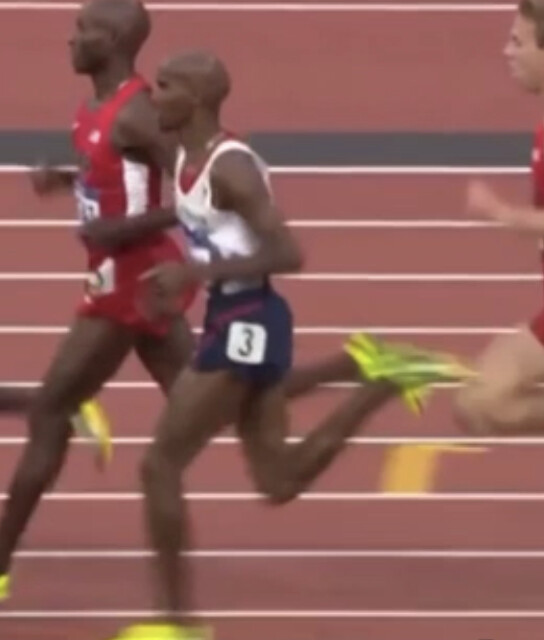
well that comes as a consequence of something and then contributes to something else…
Not being able to ascertain that you had fluctuations in forward lean pretty much makes your friendly running app hopeless…
well that comes as a consequence of something and then contributes to something else…
Not being able to ascertain that you had fluctuations in forward lean pretty much makes your friendly running app hopeless…
Hip extension, contributes to stride length?
hip extension does indeed contribute to stride length
so Confused us said…i mean Confucius
A good spot…
yep
yes and no….as a generalisation, form gets better as runners increase pace, however our problem child here has mostly taken his walking gait into running and this quickly becomes worse…
Moderate reps are certainly recommended when developing form…
always intrigued by the term isometrical movements - I know what you mean, but it is contradictory…
whilst that is one of the best ways to develop fitness…if you start with poor form, it never gets better…
I sense that I’m being told that I’m right, but also that I’m wrong…so these things don’t contribute to the knee drive?
How about heel lift and hip movement, to enable better knee drive?
And what’s a moderate rep? Threshold pace?
it’s not one of the big four, simply because its contribution is less…that said, if you want to run like Mo then you probably need to commit to an extensive hip mobility development plan…that will also help your glutes.
Hip mobility might well be a genetic advantage in great runners…
Leg recovery (heel lift) contributes to knee drive. There is an energy cost to leg recovery, however the trade off is in what Romanov called the extensor paradox where once the hamstring is loaded it has to unload and does so by pushing the knee forward. This is great for triathletes because hip flexors are already fatigued from cycling. However, and this is a big problem for those who state ‘just run zone 2’. Unless you train with high leg recovery - which usually requires running faster - when you want to run fast in races, you have an untrained high leg recovery which is usually not sustainable…
tempo to threshold, possibly faster…but it really depends on the onjective.
Doing drills into running is usually pretty fast and not sustainable…reps should be meaningful and repeatable. Comfortably hard might be the limit until form is established.
Is this a good, indifferent or bad example?
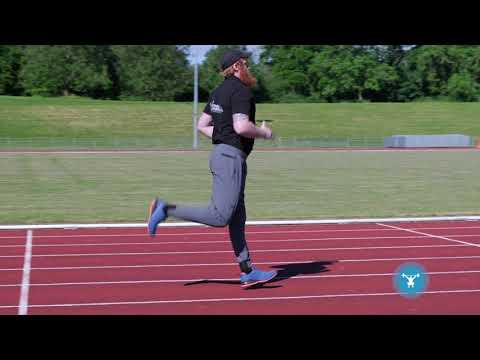
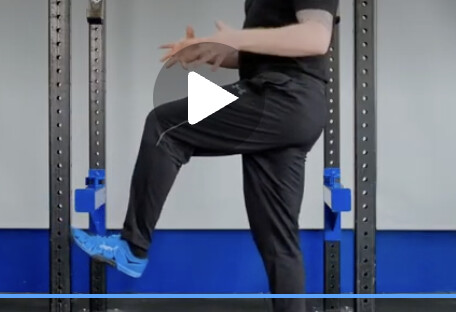
This is the traditional version often used as a general warm-up.
This variation is more “running-specific” as it mimics the recovery phase of the gait cycle.
| Feature | Low-Knee Flicks | High-Knee Flicks |
|---|---|---|
| Primary Goal | Stretching & Mobilization | Running Efficiency & Strength |
| Knee Position | Pointed down | Driven forward/up |
| Focus Area | Quadriceps | Hamstrings & Hip Flexors |
| Gait Phase | General movement | Recovery/Pull-through phase |
I think the second variation is the one he’s saying not to do.
it’s not that you don’t do it, but that they are different exercises for different purposes…
Pull through, certainly…but the part neglected is opening the hip flexors to allow for stride length and height/position of leg recovery…
I think he mentions that, I will watch it again later and or find another example (going for a plod in the wonderful weather, before I can’t claim its lunch time.)
he also mentions fondling his buttocks…
“and Mo makes his final push into the last 100, fondling his buttocks like a pro…”
? Energy to be released ?
Dont know.
He might as well, maybe there was no better offer.
I’ve just downloaded this app but not actually done anything with it mostly because of the high cost.
I coach my local running club and up to now I’ve generally used just an iPhone and slo-mo to look at how people run but is there anything similar to bike fast fit pro for running out there though allows you do similar things like measure running form.
Appreciate it’s a niche so any software is likely expensive. I don’t mind spending a bit of cash to be able to record and then do the measurements myself but the £500 per year for ‘coach’ version of ouchy is a bit much
I’ll ask our club coach tomorrow